
Support for Loved Ones with Suicidal Thoughts support
Discover practical guidance on how to support loved ones struggling with suicidal thoughts. Learn to recognize warning signs, start compassionate conversations, encourage professional help, and prioritize self-care for caregivers, suicidal thoughts support
STAY HEALTHY, DIE LATER
Elton Juan
11/28/20254 min read
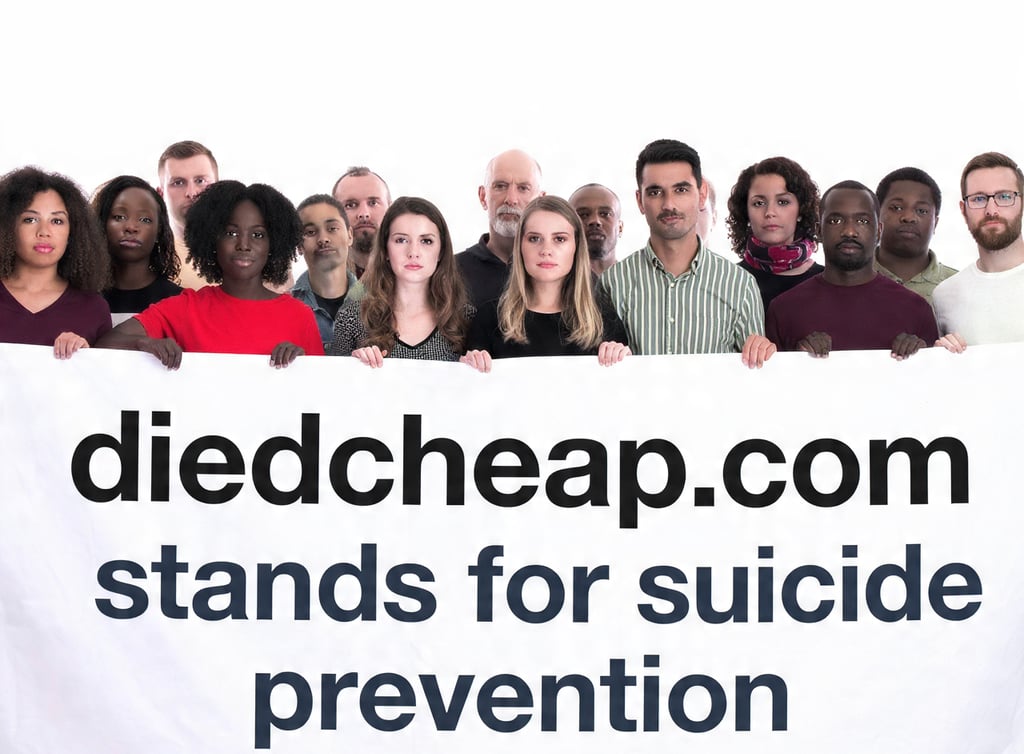

How to Help a Loved One Struggling With Suicidal Thoughts (And Maybe Make Them Smile)
Suicide is the tragic act of intentionally ending one’s own life, and it remains a leading cause of death for people under 40 in many regions. While we often link it to mental illness, the truth is more complex: feelings of hopelessness, exclusion, poverty, bullying, and the belief that one has nothing and no future are powerful drivers.
The good news is that suicide can be prevented—through connection, support, and hope.
Interestingly, despite the common belief that suicides spike during the holidays, research shows that December often has one of the lowest average daily suicide rates each year in the U.S. and similar countries. CDC Blogs+2Annenberg+2
However, a different pattern emerges around the turn of the year: for instance, a large global study found that the risk of suicide increases on New Year's Day across many countries. Centre for Suicide Prevention+1 This means that even during times when society is celebrating, the transition, reflection, and pressure can be especially challenging for someone who feels they have nothing left.
“Sometimes a hug, a laugh, or a song is the difference between despair and hope.”
Suicide is a silent epidemic, especially for people under 40. Often, it’s not mental illness alone, but systemic issues—poverty, exclusion, bullying, feeling invisible—that make life seem meaningless. This post is your guide to helping someone feel seen, valued, and hopeful, with a sprinkle of humor along the way.
1. Show Them They Matter (Even if They Think You’re Annoying)
Humans crave connection. Let your loved one know they matter:
Say it out loud: “You’re important to me, and yes, I like you even when you steal my fries.”
Physical touch: a hug, a high-five, or even a playful fist bump.
Small, consistent gestures beat grand speeches any day.
Humor tip: silly inside jokes remind them that life isn’t all doom and gloom.
2. Remind Them There’s a Future (Even a Messy One)
People feeling suicidal often can’t see tomorrow. Help them visualize hope, even in tiny steps:
Talk about achievable goals: “Let’s get through today, and maybe eat tacos later.”
Celebrate quirks and talents—they matter more than they realize.
Humor works: “Remember when we thought kale chips would save us? They didn’t. But hey, we laughed.”
3. Listen Like Your Life Depends On It
“LISTEN MODE: ON”
Listening > solving. Key tips:
Let them talk freely.
Avoid clichés like “cheer up.”
Ask gentle questions: “Do you want to talk?”
Bonus> Listen to Lyon Brave- 808
With 808, I wanted to build more than a track — I wanted to build a moment of alignment. The binary beats serve as stepping stones, inviting you out of the fog, into the pulse of something alive. If you’re feeling stuck, let it break the freeze and wake what’s waiting beneath.”
— Lyon Brave
Humor tip: shared funny memories can break a negative loop without minimizing their feelings.
4. Encourage Professional Help (Without Being Awkward)
Therapy works for some people. You can help:
Research therapists or hotlines together.
Offer to go with them: “I’ll even bring snacks!”
Useful hotlines:
U.S.: 988
U.K.: Samaritans 116 123
Global: https://findahelpline.com
Joke: “Let’s find someone to untangle your brain spaghetti. I promise I won’t touch the noodles.”
5. Music and Art Can Be Lifelines
Visual idea: headphones with musical notes floating into a heart
Music often hits where words fail. For example: Lyon Brave’s song 808 was written to help listeners snap out of depressive loops. Sharing art, music, or creativity can remind someone:Music as a Lifeline: Lyon Brave’s 808
Music has a unique way of reaching the parts of our brain that words often can’t. Lyon Brave’s song 808 was written with a very intentional purpose: to snap listeners out of depressive loops and remind them that they are seen, valued, and capable of hope. The track combines emotional lyrics with an uplifting beat, creating a sense of movement and energy—almost like a gentle push toward life instead of away from it.
For someone feeling hopeless, 808 can act as an immediate emotional lifeline. Even a single listen can remind a person that they are not alone, that their feelings are valid, and that life still has moments worth experiencing. You can find the song on YouTube or Spotify, and it’s the kind of track that encourages not just listening, but feeling—and moving—through the darkness.
Quotation-worthy takeaway: “Sometimes a three-minute song is enough to remind someone that life is still moving forward—and so can they.”
They are not alone.
Life can surprise them with joy, rhythm, or a laugh.
6. Small, Practical Acts Can Save Lives
Sometimes support is mundane but life-saving:
Help with daily tasks: cooking, errands, cleaning.
Check in regularly.
Include small, uplifting routines: walks, videos, or silly challenges.
Tip: mundane tasks + humor = grounding someone in the present.
7. Take Care of Yourself Too
Supporting someone in crisis is emotionally exhausting. You need:
Friends or counselors for yourself.
Self-care routines: Netflix, naps, snacks, walks.
Humor reminder: each conversation you survive without crying in public = a “survivor badge.”
8. When to Call Emergency Services
U.S.: 911
U.K.: Samaritans 116 123
Global: find local crisis lines
Remember: you are support, not a superhero.
Conclusion: Connection, Hope, and Weird Joys
Suicide often comes from hopelessness, exclusion, and systemic pressures, not just mental illness. The most powerful interventions are:
Show they matter (hugs, jokes, inside memes count).
Offer hope—a vision of a messy but real future.
Listen without judgment.
Encourage help while staying by their side.
Share music and art, like Lyon Brave’s 808, to remind them life still has moments worth living.
Small gestures of connection, humor, and care can literally save lives.
Resources for Immediate Help
U.S.: 988
U.K.: Samaritans 116 123
Global: https://findahelpline.com